Claude Training Singapore for Knowledge Teams
1-day onsite Claude training on your documents. Long-document analysis, contract review, multi-source synthesis, and accurate structured data extraction.
Your team uses Claude like a search box. It is a reasoning tool.
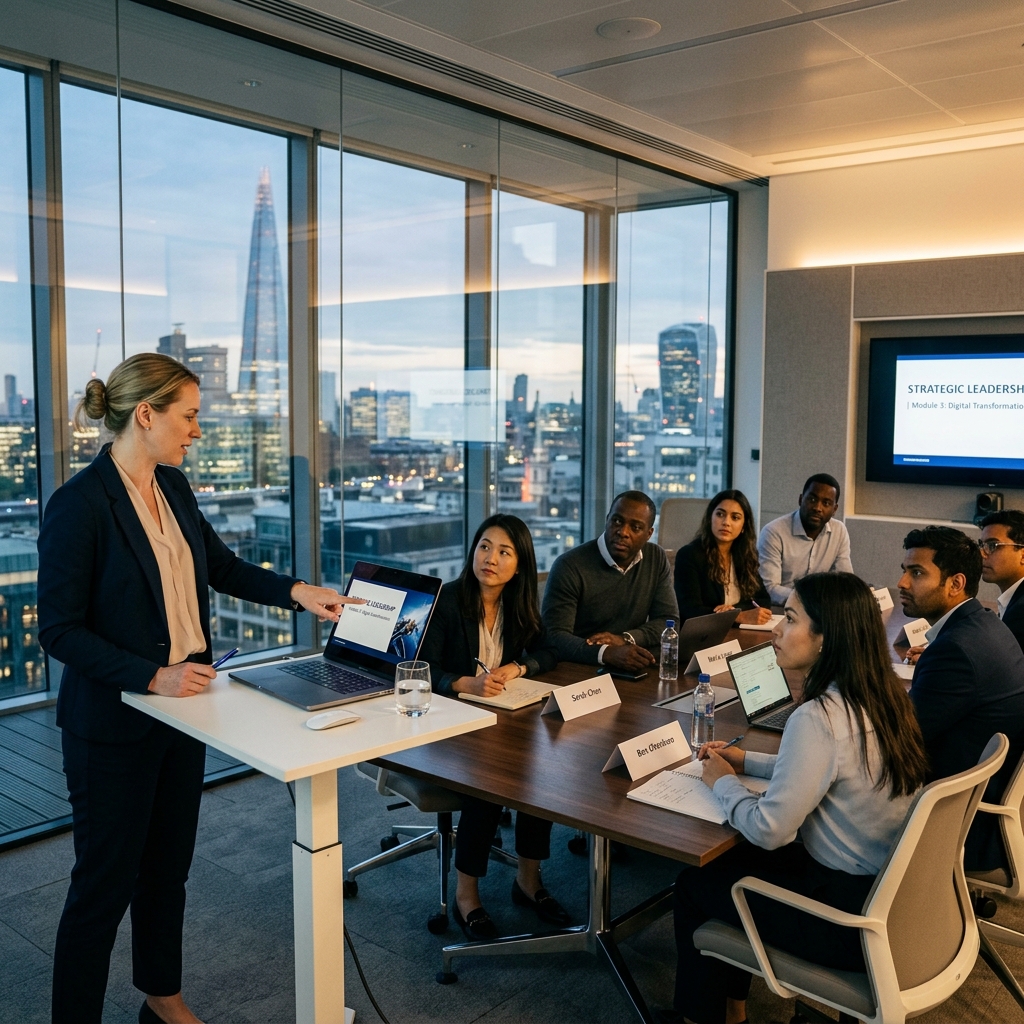
We train your knowledge workers onsite, on your own documents and contracts, to build Claude workflows for long-document analysis, synthesis and drafting that hold up under review — in one day.
Runs under your organisation's approved Claude deployment and data controls. Enterprise NDA.
This is not a Claude demo. It is a working session on your own documents.
Most teams use a long-context reasoning model to summarise a two-page email. The value is in the 200-page contract, the six conflicting reports, and the analysis nobody has time to do properly.
Generic AI Training
- Prompt tricks. A list of clever prompts, with nothing that survives a real document set.
- Short-context habits. Teaches question-and-answer patterns that waste what a long-context model is actually good at.
- Sample documents. Demo PDFs that are cleaner and shorter than anything in your own repository.
- No review discipline. Never addresses how a synthesis gets checked before it reaches a client or a regulator.
Specialised Claude Training
- Long-document work. Contract review, multi-report synthesis, structured extraction and comparison across large document sets.
- Practitioner led. Taught by someone who has delivered AI systems into regulated environments where output gets audited.
- Your documents. Your own contracts, reports and research — redacted where confidentiality requires it.
- Review built in. Every workflow includes how the output gets verified against source before anyone relies on it.
Six knowledge workflows, built by your team, during the day.
Roughly 30% instruction, 70% hands-on, on your own document set.
- Long-Document Analysis
- Contract Review
- Multi-Source Synthesis
- Structured Extraction
- Drafting & Redrafting
- Source Verification
What changes the next morning
Specific work, not general capability.
- Before: A 200-page agreement read cover to cover before anyone can advise on it After: Key clauses, deviations and risks extracted with the page cited, then read in full where it matters
- Before: Six reports summarised separately and reconciled by hand After: Synthesised across sources with the disagreements surfaced rather than smoothed over
- Before: Structured data pulled out of documents by copy-paste After: Extracted into a consistent schema, spot-checked against source
- Before: First drafts written from scratch every time After: Drafted against your own house patterns and precedent, then edited by the expert
- Before: Output trusted because it reads well After: Checked against the source document as a standing step in the workflow
One day. Your office. Hour by hour.
Short teaching blocks, then your team works on your own documents.
- 9:00 Foundations for knowledge work. What a long-context reasoning model does well, where it fails, and why the habits people bring from short chat tools waste most of its value.
- 10:00 Long-document analysis. Work a real long document end to end. Extract, locate, cite and challenge — including how to make the model show you where an answer came from.
- 11:30 Contract and agreement review. Clause extraction, deviation against your standard positions, and risk flagging — with the legal judgement left firmly with your people.
- 1:30 Multi-source synthesis. Combine several documents that partially disagree, and get the conflicts surfaced rather than averaged away. This is where most teams get the biggest gain.
- 3:00 Drafting and structured extraction. Draft against your own precedent and house style, and extract structured data into a consistent schema you can actually use downstream.
- 4:00 Beyond prompting: build a working use case. Each group builds one workflow end to end on real documents and demonstrates it to the room.
- 5:00 Take it back to work. Prompt library exported, owners assigned, and agreement on the review step that applies before any output is relied upon.
What your team leaves with
Artefacts your team can apply to the next matter.
- A working knowledge use case. Built on your own documents during the session and demonstrated before anyone leaves.
- A reusable prompt library. Documented and exported, so the patterns transfer to people who were not in the room.
- A long-document review pattern. Extraction and citation habits that make output checkable against the source.
- A synthesis pattern for conflicting sources. A method that surfaces disagreement between documents rather than hiding it.
- A verification step. An agreed review discipline applied before any output reaches a client, board or regulator.
- A short adoption plan. What the team uses on the next matter, and what is deliberately kept manual.
Who this training is for.
This training earns its keep where documents are long and the cost of a wrong answer is real.
A good fit
- Teams with an approved organisational Claude deployment in place
- Six or more knowledge workers who can be released for a full day
- Work involving long documents, contracts, research or multi-source analysis
- A leader who can decide what the team adopts and what review step applies
Not a fit
- No approved deployment yet — talk to us about readiness and data controls first
- Looking for a prompt-engineering webinar rather than hands-on work
- Work that is mostly short-form email and chat; the gain will be small
- Unable to release the team for an uninterrupted day
What a Claude session looks like, team by team
One exercise from each team's day, as it runs on your own material in Claude Cowork.
Finance & Accounting: Lease agreement to ledger inputs
- What goes in
- A 60-page property lease and its side letter.
- What is asked
- Extract commencement date, term, rent schedule, escalations, break options and incentives, quoting the clause for each, for the SFRS(I) 16 lease schedule.
- What comes out
- A one-page extraction table your team loads into the lease schedule.
- What the reviewer checks
- A reviewer opens each quoted clause and confirms the figure; the accounting judgement on options stays with the accountant.
HR & People: Employment agreement comparison
- What goes in
- Your current employment agreement template and three older versions still in force.
- What is asked
- Compare notice periods, restraint clauses, leave entitlements and benefits across all four, naming the governing clause each time.
- What comes out
- A comparison table showing which staff are on which terms.
- What the reviewer checks
- HR confirms each difference against the signed originals before anyone is told their terms differ.
Sales & Marketing: RFP to requirements matrix
- What goes in
- A 90-page tender document with appendices.
- What is asked
- List every mandatory and optional requirement, the clause it sits in, the submission format and the deadline.
- What comes out
- A requirements matrix the bid team answers against.
- What the reviewer checks
- The bid lead spot-checks a sample of clauses and reads the evaluation criteria in full, because a missed mandatory item disqualifies a bid.
Customer Service & Support: Escalation handover from a long case history
- What goes in
- A six-week complaint thread with internal notes.
- What is asked
- Summarise what the customer was told, what was promised and by whom, and what is still open.
- What comes out
- A handover note the next owner reads in two minutes.
- What the reviewer checks
- Every promise in the summary is located in the thread; any promise found in the thread but missing from the summary is a failed check.
Operations & Supply Chain: Supplier contract comparison
- What goes in
- Two competing supplier agreements and your evaluation criteria.
- What is asked
- Compare liability caps, service levels, termination rights and price adjustment terms clause by clause, and flag any term that is missing.
- What comes out
- A side-by-side table with gaps marked as gaps.
- What the reviewer checks
- A missing term is raised with the supplier, never inferred from the other contract.
Leadership & Strategy: Board pack to decision brief
- What goes in
- A 120-page board pack.
- What is asked
- Produce a two-page brief: the decisions requested, the options presented, the evidence behind each and what is not in the pack.
- What comes out
- A brief a director reads before the meeting, not instead of it.
- What the reviewer checks
- Each option and figure in the brief carries a page reference the director can open.
What your team will have built by 5pm.
The session is built around one commitment: your team applies Claude to real documents and leaves with at least one working use case they built themselves. We scope the day with you beforehand so that outcome is realistic for your team.
Not taught by an AI generalist
Knowledge teams are hard to impress and quick to spot a demo. This is who runs the session.

Abhijit Ghosh
Founder, Eagentix · Data & Generative AI Practitioner · Singapore
Sessions are delivered by Abhijit Ghosh, who has spent 25 years in data and AI, including roles at Accenture, IBM, Deloitte, Cloudera, Tibco and Wipro. Sessions are run by the practitioner, not handed to a junior facilitator.
We deliver these sessions under enterprise NDA, and client names are withheld — the same confidentiality that will cover your own session. If you would like a reference conversation, we will arrange one directly with a past client rather than publish a quote.
One day. Your office. Hour by hour.
- 9:00 — Foundations for knowledge work: What a long-context reasoning model does well, where it fails, and why the habits people bring from short chat tools waste most of its value.
- 10:00 — Long-document analysis: Work a real long document end to end. Extract, locate, cite and challenge — including how to make the model show you where an answer came from.
- 11:30 — Contract and agreement review: Clause extraction, deviation against your standard positions, and risk flagging — with the legal judgement left firmly with your people.
- 1:30 — Multi-source synthesis: Combine several documents that partially disagree, and get the conflicts surfaced rather than averaged away. This is where most teams get the biggest gain.
- 3:00 — Drafting and structured extraction: Draft against your own precedent and house style, and extract structured data into a consistent schema you can actually use downstream.
- 4:00 — Beyond prompting: build a working use case: Each group builds one workflow end to end on real documents and demonstrates it to the room.
- 5:00 — Take it back to work: Prompt library exported, owners assigned, and agreement on the review step that applies before any output is relied upon.
Frequently Asked Questions
Is our confidential material safe during onsite training?
We sign enterprise NDAs prior to the session, and all hands-on exercises use your organisation's own approved Claude deployment under whatever data controls your administrators have configured. Where material is especially sensitive we work from redacted versions your team prepares. We do not retain copies of anything used on the day.
Can Claude review our contracts for us?
It can extract clauses, flag deviations from your standard positions and surface risks far faster than reading cover to cover. The legal judgement stays with your lawyers. We build every review workflow so the output is cited back to the source document and checked, rather than accepted because it reads convincingly.
What exactly will our team have at the end of the day?
By the end of the workshop your team will have applied Claude to real documents and built at least one working use case during the session. We agree the specific use case with you before the session so it is realistic for your team and their data.
We already use ChatGPT or Copilot. Is this redundant?
Not usually. Most organisations end up with more than one tool, and the useful skill is knowing which work belongs where. This session focuses on long-document reasoning and synthesis, which is the work teams most often do badly with a general chat habit.
How many people can attend?
Up to around 15 works well for hands-on coaching. Beyond that we split into two sessions rather than dilute the room. Pricing is a flat day rate, not per seat.
Do you deliver outside Singapore?
Yes. We deliver onsite across Singapore and the wider Southeast Asia region, and travel further for larger engagements.